


I’ve just spent the last few months with our newest cohort of The Wise Women’s Council, and we are already deep in the work: the meta lessons, the leadership skills, and the growth of each person. It’s a magical room to be in. This year, I asked one of our WWC members if she would write about the journey and her experience. Hannah Howard is an author of two best-selling books, a teacher and business owner, and a mother of two little ones. Every month, she’s writing about our leadership themes and monthly teaching, with insight into what she’s learning.
In December, she wrote about renegotiating her understanding of rest in a culture that says rest should always come last, after the work. “No one taught me that proactive rest could prevent that collapse. That choosing to repair myself before I was depleted wasn’t lazy or indulgent, it was strategic, sustaining, even brave,” she wrote. Women leaders are often some of the most hard-working (and exhausted) people I know.
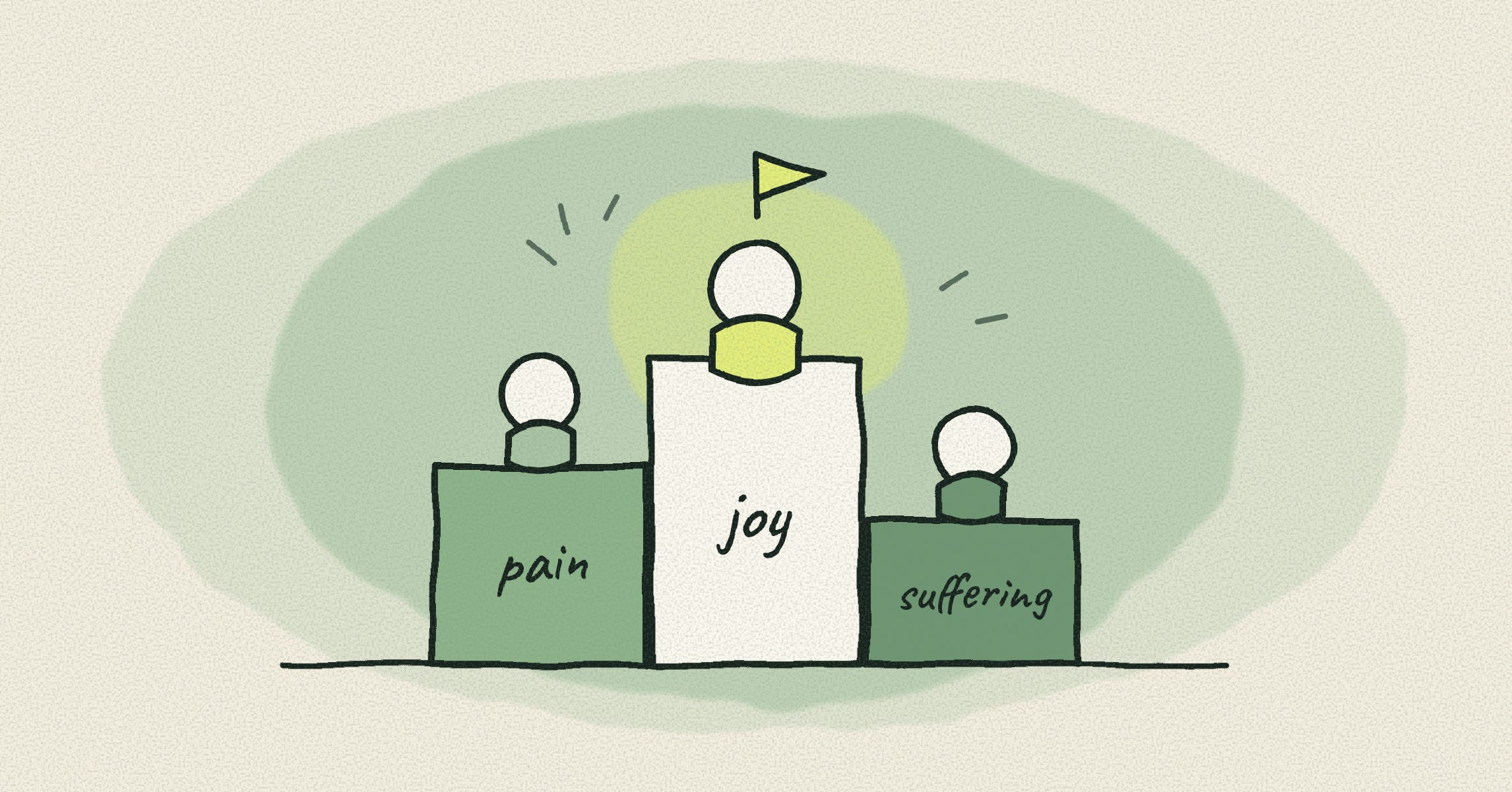
One of the deeper truths we touch on in the Wise Women’s Council is the idea that we don’t win if we compare joys or sufferings. We are each individuals having very unique experiences; the pain and joy we feel in each of our bodies is relevant, even with everything else going on. Diminishing our own suffering because someone else has it “worse” can accidentally lead to smashing your own feelings away, which doesn’t always work in the long-term. Now, it’s not always appropriate to spill your guts and pour your feelings over everyone, but moderating how we display our emotions is part of EQ and maturity. But denying ourselves our real stories and bodily wisdom is unwise. That’s why we talk about this idea of comparative joy and comparative suffering. Hannah writes about it below for her January reflection. This is Hannah’s second year in The Wise Women’s Council, and the essay that follows is by her.
— Sarah K Peck
No One Wins the Pain (or Joy) Olympics
I’ve noticed something lately on work calls.
Someone will say, almost apologetically, “I know the world is so intense right now…” and the rest of us will nod, as if we’re all collectively agreeing not to take up too much emotional space. As if there’s a moral economy of suffering and we’re afraid of overdrawing our account.
Sarah K Peck calls this the “Pain Olympics” — the belief that suffering and joy must be ranked, that only the biggest tragedies deserve attention, that anything else is somehow embarrassing or indulgent.
But here’s the thing I know now, not just in my head but in my body: that belief almost killed me.
For years, I didn’t think my eating disorder was “real enough” to deserve care. I wasn’t starving in a dramatic way. I wasn’t visibly sick. I was functioning. I was working. I was productive. I was praised. In a culture that equates discipline with virtue and thinness with success, my suffering was rewarded—which made it even harder to name.
Diet culture gave me a perfect hiding place.
It told me my hunger was a moral failure.
It told me my body was a problem to solve.
It told me that wanting less space in the world was noble.
And because I was, by any objective measure, deeply lucky — educated, housed, loved, successful — I internalized the idea that I had no right to be struggling. I had read the books. I believed the politics. I knew all bodies were supposed to be beautiful. I just didn’t believe mine was allowed to be one of them.
And because I was, by any objective measure, deeply lucky — educated, housed, loved, successful — I internalized the idea that I had no right to be struggling.
So I did what so many smart, thoughtful women do: I turned my pain into self-improvement.
I told myself I wasn’t sick — I was disciplined.
I wasn’t anxious — I was “health-conscious.”
I wasn’t disappearing — I was becoming better.
Meanwhile, my nervous system was living in a state of constant emergency. Food was never just food. It was math, control, fear, worthiness, and relief all tangled together. My head could recite feminist theory, but my body was trapped in a loop of deprivation and panic.
And here’s the part no one tells you:
You cannot recover from something you don’t believe you’re allowed to have.
Healing didn’t begin when I found the perfect framework. It began when I said, quietly and without justification, This hurts. When I stopped asking whether my pain was impressive enough, dramatic enough, tragic enough to qualify.
It turns out the body doesn’t care about your résumé.
Trauma doesn’t ask if you’re privileged.
Hunger doesn’t care if you “should know better.”
What changed everything was kindness.
What changed everything was kindness. Not the Instagram kind — the actual, daily, uncomfortable practice of treating myself like someone whose life mattered. Letting myself eat without earning it. Letting myself rest without apologizing. Letting myself feel grief, fear, and longing without ranking them against anyone else’s.
Sarah K. Peck is right: comparative suffering is a lie. But so is comparative healing. There isn’t a more respectable kind of brokenness. There isn’t a purer kind of recovery. There’s just this person, in this body, trying to live.
I think that’s why this resonates so deeply now. So many of us are navigating a world that feels genuinely overwhelming, politically, economically, emotionally. And we’re trying to be “good” about it. We’re trying not to complain. Not to take up too much space. Not to be selfish.
But silencing ourselves isn’t strength. And minimizing our pain doesn’t make us more compassionate.
What actually makes us capable of showing up—for our kids, our work, each other—is letting what’s true be true. Letting joy exist even when the world is burning. Letting grief be named even when others have it worse.
Recovery taught me this:
You don’t heal by disappearing.
You heal by staying.
By being here.
By eating.
By feeling.
By refusing to make your own life smaller in order to seem more acceptable.
There is no prize for suffering quietly.
There is no virtue in not needing.
There is only this moment, this breath, this body—asking, again and again, to be treated with care.
Hannah Howard is the author of the memoirs Feast: True Love in and out of the Kitchen and Plenty: A Memoir of Food and Family. She writes for Food & Wine, Travel + Leisure, and Bon Appetit. Hannah lives in Chicago with her family and loves stinky cheese. Subscribe to her Substack, Letters from Hannah. She is also a member of The Wise Women’s Council.


