



One of the greatest gifts of The Wise Women’s Council is the women themselves. For the past ten years, I’ve run an intimate women’s group coaching program, where I have the privilege of learning alongside founders, executives, consultants, creatives, coaches, and leaders who are navigating real questions about work, life, leadership, family, ambition, identity, and change.
The internet often rewards certainty and polished answers. But the women in this community remind me that wisdom is something different. The older I get, the less interested I am in expertise alone. I'm interested in practice. I’m interested in the messiness of everyday life, and how we show up in the moments that become our years.
I want to know how women are navigating business building alongside a culture that didn’t want women in leadership positions for the last two hundred years. I’m hungry to learn from women who let the house be messy, who shift the mental load into visible spaces; who stand up for what they believe in; who give a damn about their own rest and well-being. I want to know how women are navigating business-building alongside caregiving. How they make difficult decisions. How they rethink success. How they manage when they feel like they’re failing at everything. How they stand up for what they believe in. How they create lives that are aligned with their values—not just impressive from the outside.
The women in this community teach me every day. So I decided to start sharing some of their stories. This new series, Wisdom In Practice, is written in collaboration with Hannah Howard, a member of Wise Women’s Council. My goal is to shine a light on the remarkable women in our community and the lessons they’re learning as they move through life and leadership. Through conversations and interviews, we’ll explore their work, the challenges they’re navigating, the lessons they’re learning, and the ideas they keep returning to again and again. Read more about the full series here.
Below is our first essay featuring decision engineer and coach Michelle Florendo. She’s been a part of The Wise Women’s Council since the very beginning, and her work has helped thousands of founders and leaders figure out how to make better decisions.
These are not stories about having it all figured out. They are stories about paying attention. These are stories about letting go of who we were, so that we can leap towards who we are becoming. These are stories about changing how we move through life.
I hope you’ll enjoy meeting the women of Wise Women’s Council as much as I’ve enjoyed learning from them.
— Sarah K Peck
The Data Hidden Inside Your Feelings
What Happens When You Stop Optimizing Everything
Essay below written by Hannah Howard
When I talked to Stanford-trained Decision Engineer Michelle Florendo, she was mid-move: boxes, logistics, the constant deciding of what stays and what goes. She mentioned it casually, like this kind of complexity was familiar terrain.
Then she said: “My brain loves optimization puzzles.”
“But the real challenge,” she added, “is communicating to all the other parties involved the things that are in my brain.”
If you’ve ever tried to explain the invisible spreadsheet in your head to a partner, a team, or a child who insists the blue cup is a catastrophe—you get it.
Michelle’s work sits at the intersection of structure and humanity. As a decision engineer and executive coach, she helps professionals and small business owners make big, complex decisions with less stress and more clarity. Her background is rigorous—engineering degree, MBA—but her core insight is surprisingly simple.
When I asked what one skill she’d teach everyone, she didn’t say productivity or confidence or morning routines.
She said: the ability to understand what your emotions are telling you—the data inside your feelings.
We’re taught to treat emotions as distractions from “real” decision-making. Michelle argues the opposite. Especially in complex situations, not all useful information is measurable. Emotions are signals—pointing to needs, values, and constraints we haven’t fully named.
Here’s the framework she uses again and again:
1. Notice and name the emotion.
Not just “I’m fine” or “I’m just stressed.”
Actually name it: frustrated, anxious, resentful, disappointed.
2. Ask what’s underneath.
Is it a real need—rest, clarity, support, recognition?
An outdated one—approval, perfection, control?
Or something you haven’t given yourself permission to want?
This is where decision-making opens up.
As Michelle put it, “If you don’t like the options in front of you, your job is to creatively generate more.” Emotions help you see where the existing options are failing—and where new ones might exist.
She sees this everywhere: in four-year-olds learning to manage big feelings, and in executives navigating burnout, recognition, and power. Naming what’s happening turns fog into information.
Michelle didn’t set out to be an entrepreneur. She’s risk-averse by nature. But motherhood made it clear the more traditional paths didn’t work—and instead of forcing herself into a bad choice, she built a better one.
She’s also clear about what’s missing from professional conversations: honest talk about constraints. Time. Energy. Caregiving. The reality that you can’t optimize everything at once.
Decision-making isn’t a game of being perfect. Perfectionism is a trap.
Decision making involves backing up from binary thinking and asking yourself to think more broadly about possibilities. Before jumping into a “pro-con” list, Michelle says it’s best to first figure out what your objectives are from the gate. She reminds people not to get too narrowed into a flipping back and forth over one single option.
Instead, ask yourself to consider a broader range of ideas. What are ALL the possibilities or courses of action that you could choose from? Are there more ways of going about this? What else could be possible?
Your emotions are essential data, because they’re telling you to look more deeply at what’s in front of you. Chances are, if you’re feeling resistance, if you’re feeling irritation or overwhelm, you could be stuck in a pro-con trap.
Maybe, maybe there’s another option that you haven’t thought of yet.
BONUS TIP: Invite a friend who is really good at divergent thinking to help you out with this part. Ask them what you haven’t yet considered.
Part of the work of decision making is the ability to think creatively and explore options beyond what you first see.
Michelle’s work is a relief, not because it makes decisions easy, but because it makes them honest. It makes them fuller. She helps people slow down long enough to hear what actually matters, instead of defaulting to what’s expected, efficient, or externally approved. The result isn’t a perfect choice–it’s something better. It’s a choice that feels true to you, grounded in your values, your dreams, your constraints, and your real life.
In a culture that rewards powering through and second-guessing yourself, that kind of clarity isn’t just useful. It changes how you move through your life.
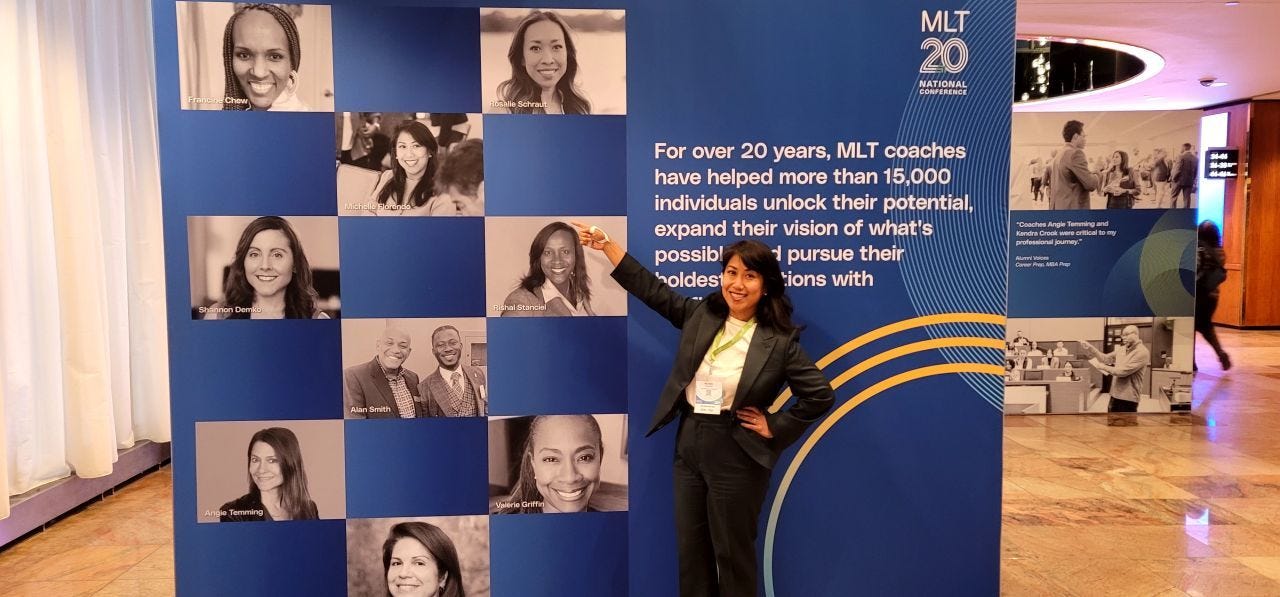
MEET MICHELLE FLORENDO
Michelle Florendo is a Stanford-trained Decision Engineer, executive coach, speaker, and founder of Powered by Decisions. She helps leaders, founders, and high-achieving professionals make decisions with less stress and more clarity by combining decision science, coaching, and practical frameworks for navigating uncertainty. Over the past decade, she has coached hundreds of leaders, taught decision-making at Stanford, and helped redesign the decision-making curriculum for Stanford’s renowned Designing Your Life program.
Learn more about Michelle:
• Website: Powered by Decisions
• About Michelle: Michelle Florendo Bio
• LinkedIn: Michelle Florendo on LinkedIn
• Podcast: Ask a Decision Engineer
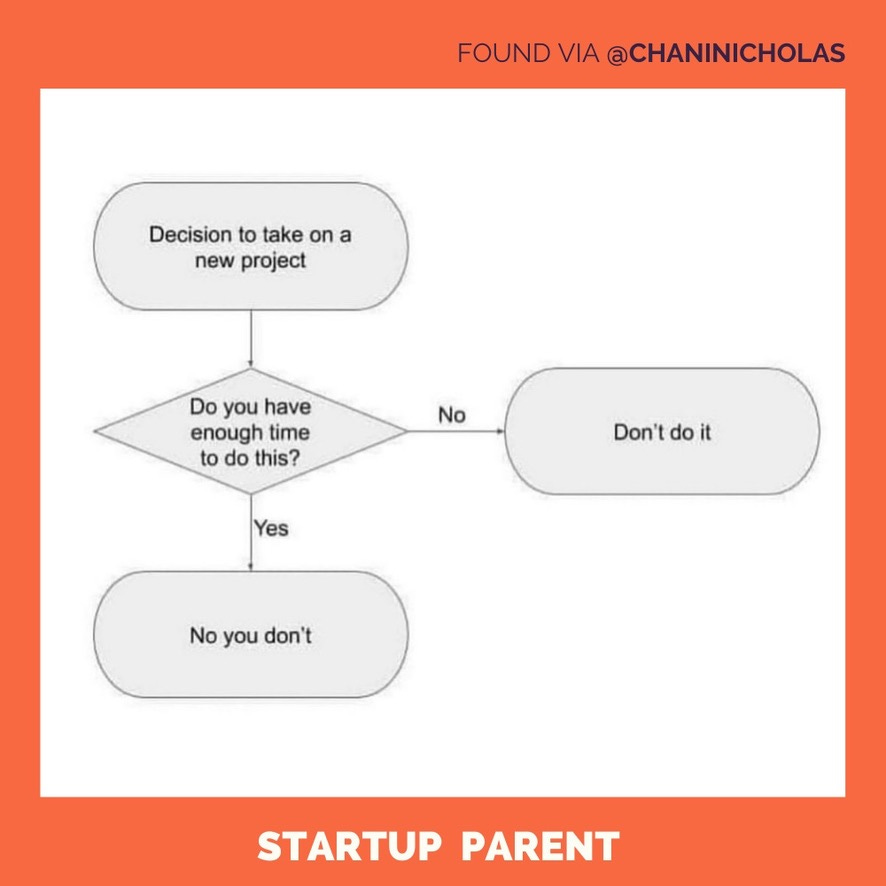
OVER TO YOU: Michelle argues that our emotions contain important information—not just noise to be managed.
Have you ever made a decision because you paid attention to a feeling you couldn’t quite explain? Or ignored one and regretted it later?
This was all just so beautifully groundbreaking to me because in the patriarchy, the messaging I got was that feelings were just things that got in the way from the “real” decisions that should be super practical and cerebral. Feelings are data, Michelle told me, and that just felt so brilliant! Of course they are are! Permission to tune in instead of looking outward and permission to take our feelings seriously = gold!
The most recent decision that I've made WITH my emotions, not in spite of them: learning to accept and care for my body when it's not able to do the things that I want it to do. For example, we're going on a trip to Disney with the kids very soon, and I've got a leg and a foot that don't want to walk long distances. I'm on crutches.
At first, I felt like I was 'ruining the trip' and that 'I needed to get in shape and get fixed quickly.' I even told some friends that I was going to 'aggressively ice and aggressively heal.' But my body needs time, and it needs rest. And I won't be able to walk 15k-20k steps a day at Disney.
So I expanded my options and tried to ask divergent-thinking questions: How can I make this fun? How can I make this easier? Why might this be a benefit? What are my options?
Looks like I'll be renting a mobile scooter, bringing a cane and crutches, and scouting out all of the places I can sit and rest throughout the days. We're also going to be taking midday rests and we've shifted our trip from 'maximize all the rides' to 'high-quality rides, fewer but more meaningful experiences.'
We can still have a great time, and I don't need to have a stress fracture in my foot to prove it.