


Essay written by Hannah Howard
You do not have to become a person who never feels jealous, resentful or rejected.
You have to become a person who can handle knowing that these feelings are all a part of being human.
This is excellent news for anyone who has ever had a deeply uncharitable thought and immediately followed it with: Wow. I thought I had worked on myself.
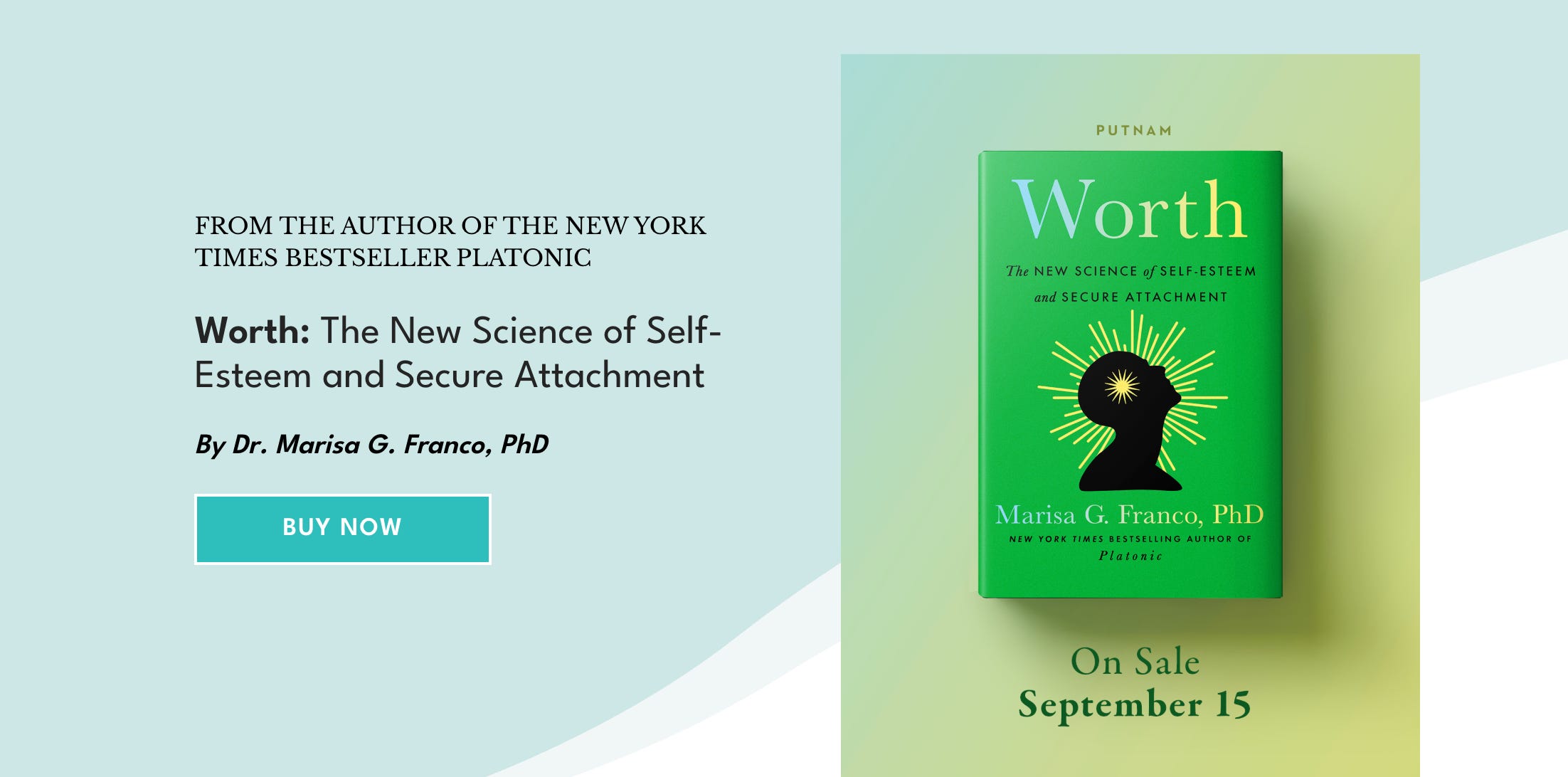
Psychologist and author Dr Marisa G Franco studies self-worth and secure attachment. She is the author of the recent book Worth: The New Science of Self-esteem and Secure Attachment —essentially, how we stay connected to other people without losing our connection to ourselves. One thing she has noticed is that our growing fluency in mental health can be both helpful and, occasionally, another stick to beat ourselves with.
“There’s this newfound literacy of mental health and emotions,” Franco says. We understand more about boundaries, codependence, narcissism and attachment styles. That language can help us recognize unhealthy patterns and protect ourselves from harm.
But it has also, Franco says, “led us to shame ourselves for not being healed enough.”
We feel abandoned and decide we are failing at secure attachment. We miss an ex who was terrible for us and wonder why all those therapy appointments have not yet transformed us into a serene person who wishes them well from a tasteful distance. We feel jealous of a friend, resentful of someone we love or irrationally hurt by a perfectly reasonable cancellation—and then judge ourselves for not having a more enlightened response.
As Franco puts it, “Healing is about accepting the messiness of our emotions.”
That does not mean every feeling is a fact, a command or a reason to send a six-paragraph text. It means we can notice what is happening inside us without immediately trying to hustle it out the back door.
Healing is about accepting the messiness of our emotions. It means we can notice what is happening inside us without immediately trying to hustle it out the back door.
Franco has been practicing this in her own life.
She says she used to confront her feelings once they became obvious and overwhelming, but the smaller ones were easier to miss: “Sometimes I feel a flash of jealousy, a flash of anger, and a part of me pulls me away from that so quickly that it’s hard to know it’s even there.”
Many women are especially skilled at this disappearing act. We have been taught that being a good person means being understanding, accommodating and unbothered. Jealousy is petty. Anger is unattractive. Resentment means we are insufficiently generous.
So we say, It’s fine.
Sometimes it is fine.
Sometimes “fine” is simply where we store a feeling until it grows teeth.
Franco shares the example of a friend who had to cancel plans after getting into an accident. Franco loved her friend and felt genuine compassion. Of course she wanted her to rest and take care of herself. She also felt hurt.
There had already been an imbalance in the friendship, and the cancellation pressed on that tender spot. Franco knew the situation was not about her, but a part of her still felt rejected. Previously, she might have rushed to correct herself: You shouldn’t feel that. Your friend was in an accident. Be reasonable.
Instead, she paused long enough to admit, “I feel a bit rejected.”
Once she acknowledged the feeling, it could move through her. Then she could tell her friend to take care of herself—and mean it. Her kindness no longer felt like people-pleasing or a performance designed to prove she was a good friend. She could care for her friend without pretending her own hurt did not exist.
“Being securely attached is not about never being triggered,” Franco says. “It’s about actually being able to tolerate your triggers without acting out.”
“Being securely attached is not about never being triggered,” Franco says. “It’s about actually being able to tolerate your triggers without acting out.”
That feels like a much more welcoming version of healing.
There is no prize for never feeling the wrong thing. There is no gold star for becoming impossible to disappoint.
Our difficult feelings may not tell the whole truth, but they usually tell us where to look. Jealousy might point toward longing. Resentment might reveal a need we have not voiced. Rejection might wake up an older fear that has little to do with the person standing in front of us.
Franco suggests imagining the wounded part of yourself as a five-year-old approaching to say, I feel abandoned. You probably would not respond, “That’s an anxious attachment response, and frankly, I expected more progress from you.”
You would make room. You might ask what hurts.
“What is vulnerable is universal,” Franco says. The feelings we fear make us uniquely selfish, needy or broken are often simply part of being a person among other people.
Healing is not becoming someone who always has the right emotional response. It is learning that even when an uncomfortable, inconvenient or embarrassingly human feeling appears, you do not have to abandon yourself for having it.
You are allowed. Consider this your permission slip.
Book Giveaway!
Win a copy of Worth: The New Science of Self-Esteem and Secure Attachment, out everywhere on September 15th. To enter, leave a comment on this post and tell us what you relate to — or something that has helped you in your own journey. All entries between September 17th and September 24th will be considered. One lucky winner will be announced after the comment window closes!
About the Author, Hannah Howard
Hannah Howard is the author of the memoirs Feast: True Love in and out of the Kitchen and Plenty: A Memoir of Food and Family. She writes for Food & Wine, Travel + Leisure, and Bon Appetit. Hannah lives in Chicago with her family and loves stinky cheese. Subscribe to her Substack, Letters from Hannah. She is also a member of The Wise Women’s Council.
Over a full year, Hannah is writing about her experience inside of The Wise Women’s Council. She’s written about changing her relationship to rest, slowing down to be present to her own life, and the dangerous trap of comparative joy. She’s also writing about the guest teachers and speakers we have who join us in the Council. We were so grateful to have Dr. Franco join us for a deeper conversation about friendship, self-esteem, and well-being.
If you’re looking for a group coaching program for women, check out The Wise Women’s Council and apply to join us this Fall.
